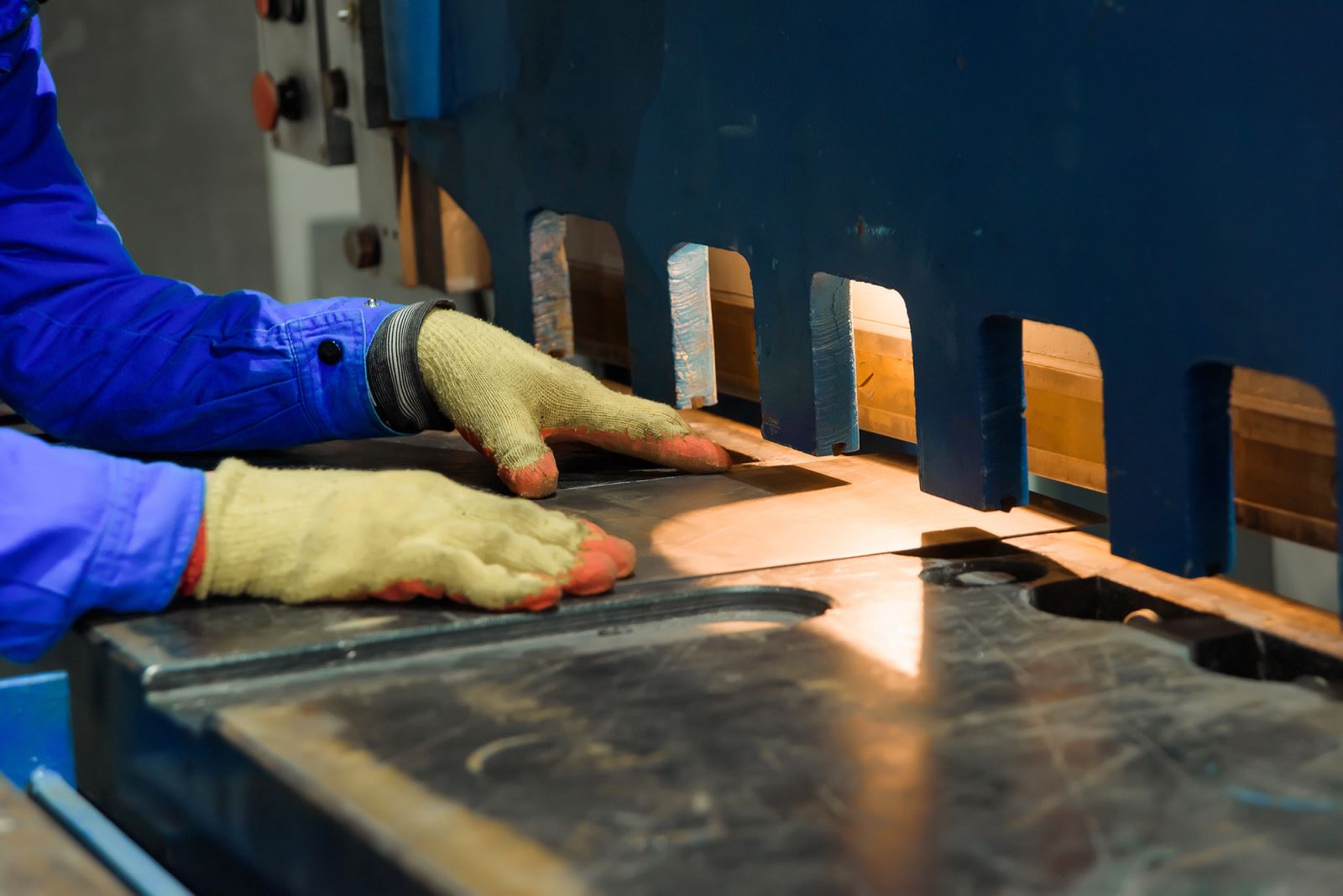
Guillotine cutting is the cutting of difficult-to-cut metals by breaking them. Guillotine resembles the scissors we use daily. Guillotine blades are double-sided. One side is movable and the other is stationary. There is a certain gap between the guillotine blades. The size of this gap varies depending on the thickness of the metal to be cut. In the past, it was a mechanism that could be controlled manually, but nowadays it is controlled by computer.
Guillotine shear is actually a bench. Cutting is realized by entering and defining metal-related data into the computer. This data obtained enables thickness and shape definition, and determines how the machine will make a cut. In this way, production is realized with zero errors or a very small margin of error. Thanks to this data, the cutting process accelerates and quality increases.
Guillotine cutting is most commonly used in construction sectors. It is preferred in construction sectors from buildings to detached houses. Guillotine cutting makes flawless, fast and quality cuts. Since it is also used for cutting hard materials, durable products emerge. It is also widely used in automotive, machinery and agricultural sectors. Among the very frequent uses of guillotine cutting are cutting materials to be used for furniture, cutting metals in the construction sector, white goods cutting, cutting steels in automotive, cutting metals in maritime and aviation sectors. Guillotine cutting is used in all sectors that need metal cutting in many more areas.
